
Living Acoustics: Healthy Workplaces That Feel Alive
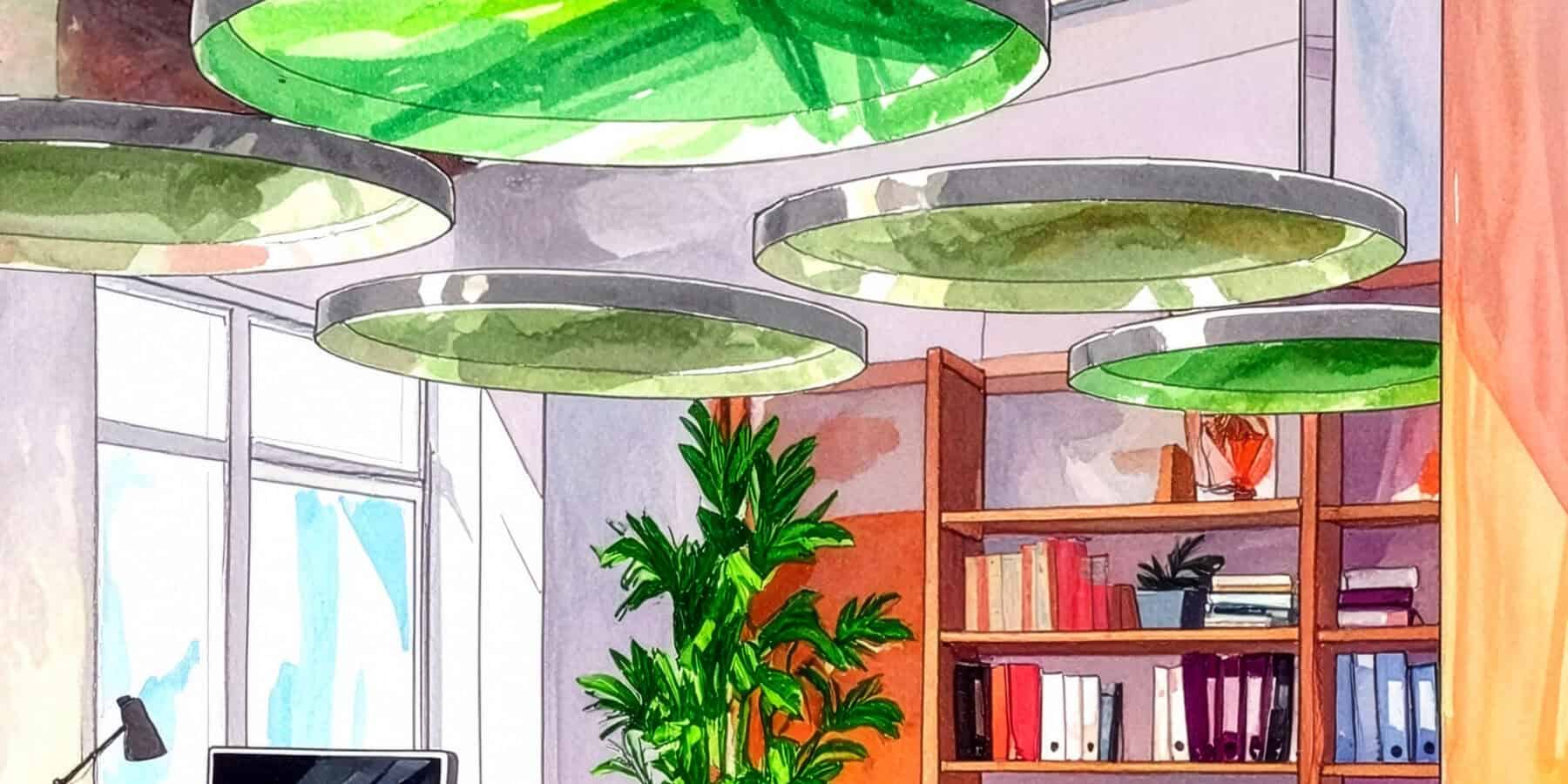
When you step into AKRF’s new midtown Manhattan workplace, the first thing you’re likely to notice is the way the space feels.
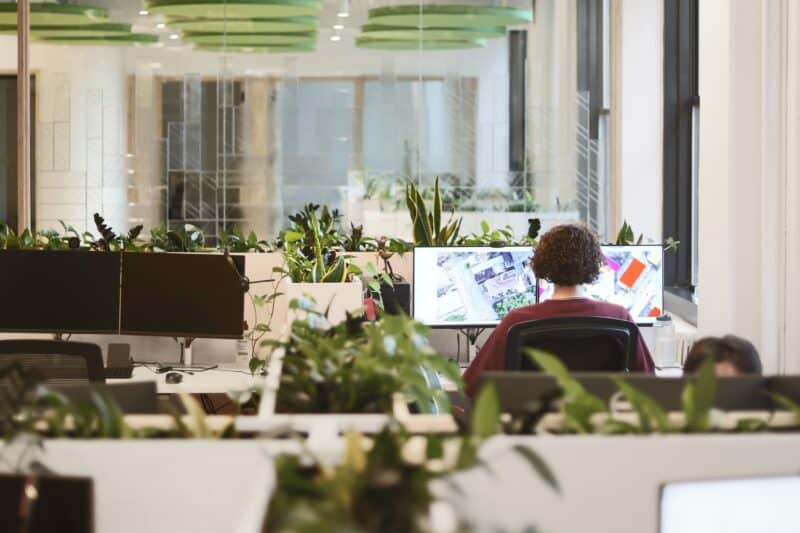
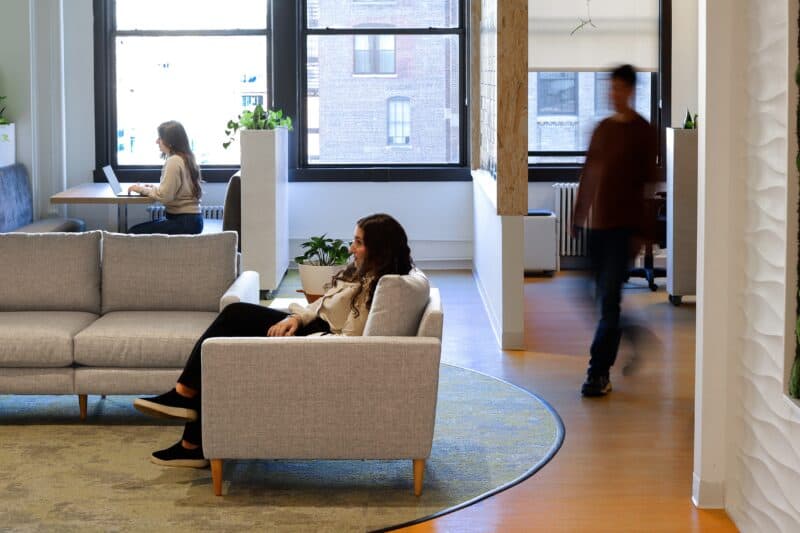
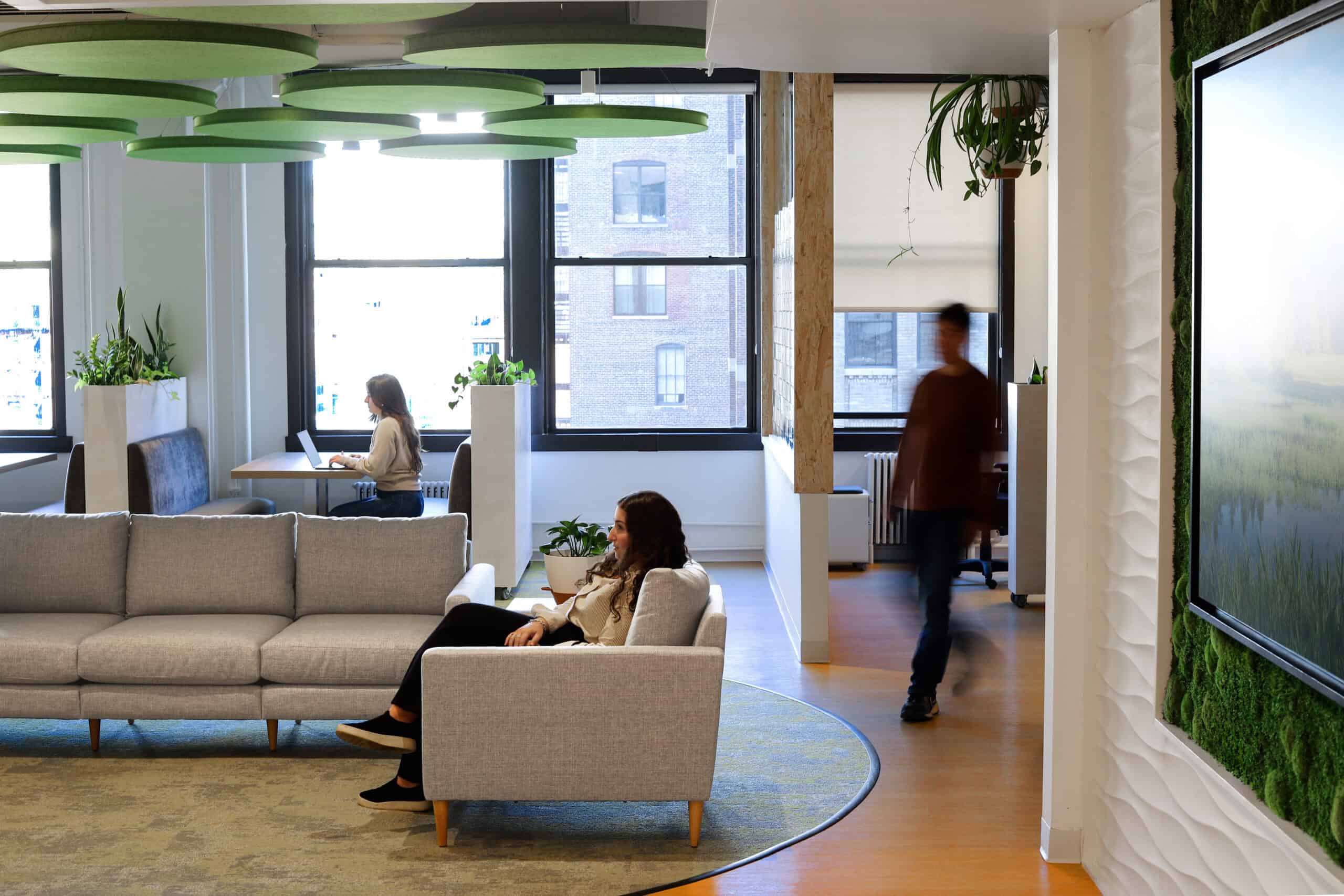
Light filters through large windows and glass partitions, and leafy baffles hang overhead like tree canopies. Despite views of skyscrapers and its location on Park Avenue South, it’s less Big Apple and more Catskills Mountains. There’s even a soothing whisper of a Catskills soundscape, with babbling brook and birdsong that shifts as you move through AKRF’s workplace.
The biophilic sound of this office isn’t a track on repeat, but an ever-changing soundscape tuned to each area of the office and changing to the rhythms of the day and the building itself. What you see, hear and touch are aligned. This is living acoustics, a new way of thinking about sound in the built environment that moves beyond controlling noise and instead starts to treat sound as living medium. And, it’s a huge creative opportunity for architects.
From Passive to Alive: A Shift in Thinking About Acoustics
Historically, workplace acoustics focused on controlling decibels, reverberation time and speech privacy. But the IWBI’s latest report—Investing in Health Pays Back—shows just how far things have come. Instead of looking at only physical acoustical interventions, the report highlights the measurable benefits of “living acoustics treatment systems” that generate natural sounds to support health and cognitive performance.
This emphasis moves acoustics from a purely passive practice to an active strategy that combines physical treatments, generative soundscapes and principles of biophilic design.
This aligns with other scientific research about sound, which shows that exposure to natural soundscapes accelerates restoration, and that pairing visual and auditory nature stimuli improves energy and motivation more than either alone.
Next Generation Acoustics
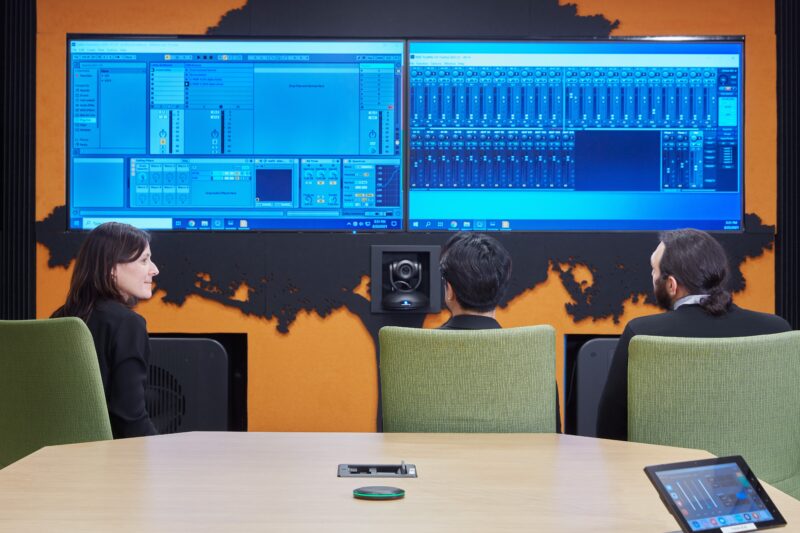
At Moodsonic, we’re working with innovative thinkers like AKRF to develop this approach. Our technology uses adaptive algorithms to generate healthy, supportive soundscapes that respond to data like time of day, lighting and occupancy.
The concept of living acoustics weaves together three interconnected threads: supportive acoustical treatments, responsive soundscapes, and multi-sensory biophilia.
1. Supportive acoustical treatments
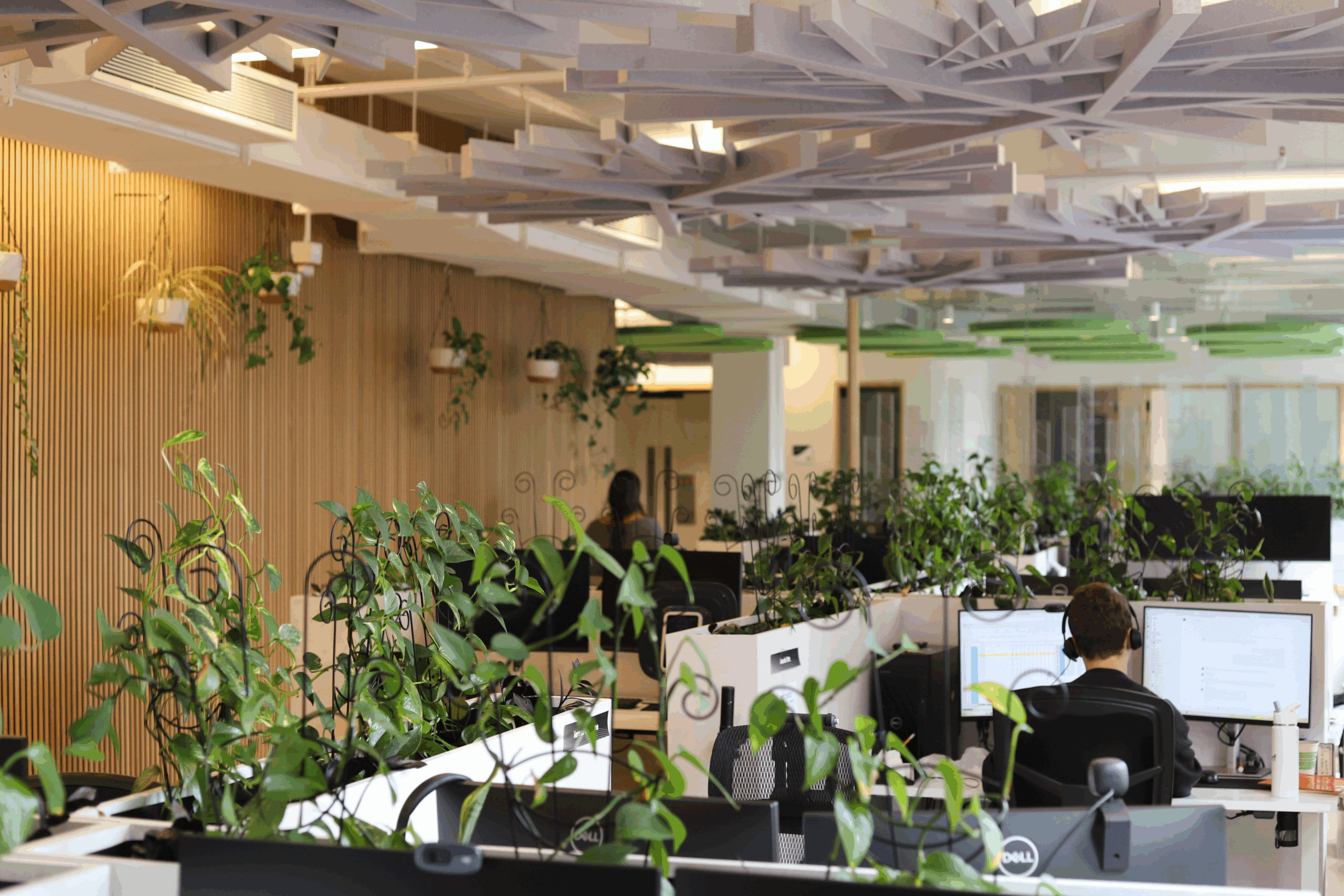
Instead of hiding acoustical materials, living acoustics celebrates them—shaped to evoke clouds, tree canopies, stone and other organic forms. At AKRF’s space, wooden baffles and perforated panels resemble tree limbs and moss while glass partitions adorned with clear acoustical tiles provide visual transparency while controlling speech frequency reflections.
These elements serve a dual purpose: they tame reverberation and speech distractions to create a more comfortable and productive acoustical environment, but they also contribute to a biophilic aesthetic that ties the space to nature with sensory cues like texture, material and shape.

2. Responsive, generative soundscapes
The art of soundscaping is not about playing a background track. Moodsonic’s technology generates soundscapes in real time, drawing from science and algorithmic composition to produce nonrepeating patterns—ideally suited for the kind of nature soundscapes paired with AKRF’s visual design.
Sensors detect information like noise, activity types, and lighting, and as the day progresses, the soundscape shifts to support circadian rhythms moving from energetic to restorative. Taken together, this creates a layer that sits in the background and avoids calling attention to itself while generating a sonic environment that has a massive impact on people’s wellbeing in the space.
Research underscores the value of this approach. IWBI’s WELL report highlights that natural soundscapes can improve cognitive performance by 13.9% and in studies at GSK’s new London HQ improved employees’ decision-making by 8%. In addition, people recover from psychological stress faster when listening to natural sounds.

3. Multisensory biophilia
Soundscaping is even more impactful when paired with rich, multi-sensory experiences. Alongside AKRF’s biophilic acoustical treatments, live plantings, natural light, carefully considered architectural layouts, and sustainable materials form an extra biophilic layer.
Why It Matters
The business case for living acoustics is compelling, and IWBI’s report showcases examples of major companies benefitting from Moodsonic’s generative soundscaping.
The WELL report highlights research that nature-based living acoustics systems can decrease time wasted by 55%, “the equivalent to saving $200,000 per year from improved productivity for a company of 100 people” —that’s $2,000 per person, per year.
Beyond the metrics, living acoustics reframes workplace acoustical design as a creative opportunity: instead of being an afterthought or a checkbox, acoustics becomes a medium that architects can sculpt, layer and tune. It’s a whole new palette to work with.
AKRF + Moodsonic: Experience Living Acoustics in Midtown Manhattan
AKRF’s 6,000‑sq‑ft office in Midtown Manhattan is a real-life example of living acoustics. The floor is divided into zones, each with its own responsive soundscape and complimentary biophilic acoustical treatments.
Visit www.moodsonic.com to learn more about living acoustics or come experience the space for yourself by emailing us at evan.benway@moodsonic.com and bsachwald@akrf.com.